Child Won't Get Dressed? What to Say in the Morning
From Maya at genzmoms
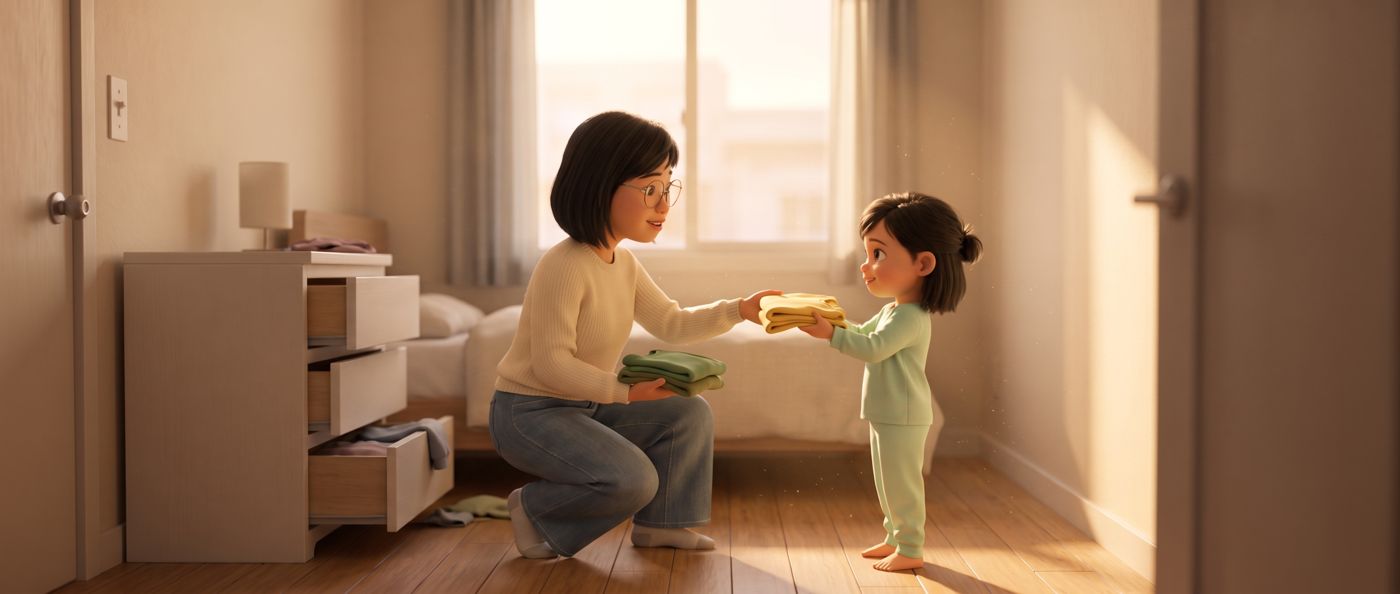
When your child won't get dressed, stop asking. Say it once as a statement, with one small real choice inside it. "Can you put your shoes on?" is a yes-or-no question, your child picked no, and now you're negotiating with someone who can't tell the time. Here is a line for each stage of the morning.
Getting dressed at all
"Please get dressed. Please. I've asked you four times."
"Clothes are on your bed. Pants first or top first?"
Getting dressed is slow and boring, and the deadline is yours. Being asked again and again can turn it into a game of how long they can hold out. Asking four times teaches them the first three asks didn't count.
Lay the clothes out the night before if you can. A choice between pants first and top first is a real one, and both answers end with a dressed child.
Shoes
"Where are your shoes? WHERE ARE YOUR SHOES?"
"Shoes come with us. On your feet, or in my hand to the car."
Shoes are the last thing standing between them and leaving, and leaving can mean losing whatever they were doing. Fix the outcome and let them pick the route. Shoes on feet or shoes in hand both get you out the door. Only one needs a search party.
When the answer to everything is no
"Don't say no to me!"
"You can say no. Shoes still go on."
Letting them say the word costs you nothing, as long as the shoes still go on. They keep the word and you keep the outcome.
When they stop dead and you're late
"That's it. No park. No tablet. No friends. Nothing."
"We're going now. I'm picking you up. You can be mad in the car."
Sometimes a kid digs in because the whole morning has been decided for them. Sometimes they're tired or not ready to go. Once you're late, the reason matters less than the door. When time has run out, stop negotiating and move them, kindly. Bring the clothes in a bag if it comes to that. Being mad about it is allowed, and the punishments you shout at 7:40 are ones you'll have forgotten by ten.
That line is for a child who is refusing. A child in a full rage who is about to hurt someone is different. Move the other person out of reach first, because picking your child up mid-rage usually makes it last longer and can get you both hurt. If you do have to lift them, lift from behind and under the arms, keep their head clear of yours, and put them down as soon as they're clear. Carrying is for leaving, never for discipline, and you never press on their chest, neck or airway.
At the car seat
"Sit DOWN. Get in the seat. Now!"
"The car doesn't move till you're clipped. I'll wait."
Pick boundaries that hold themselves. The car doesn't move until they're clipped, so you don't have to argue. You only have to wait.
Starting tomorrow
Pick one of these, the one that wrecked your morning, and use those words for a week. Use the words as written. It'll feel stiff at first. If it's making things harder rather than easier, stop and rethink the approach.
If the morning ends in tears at the classroom door, read what to say at drop-off.